
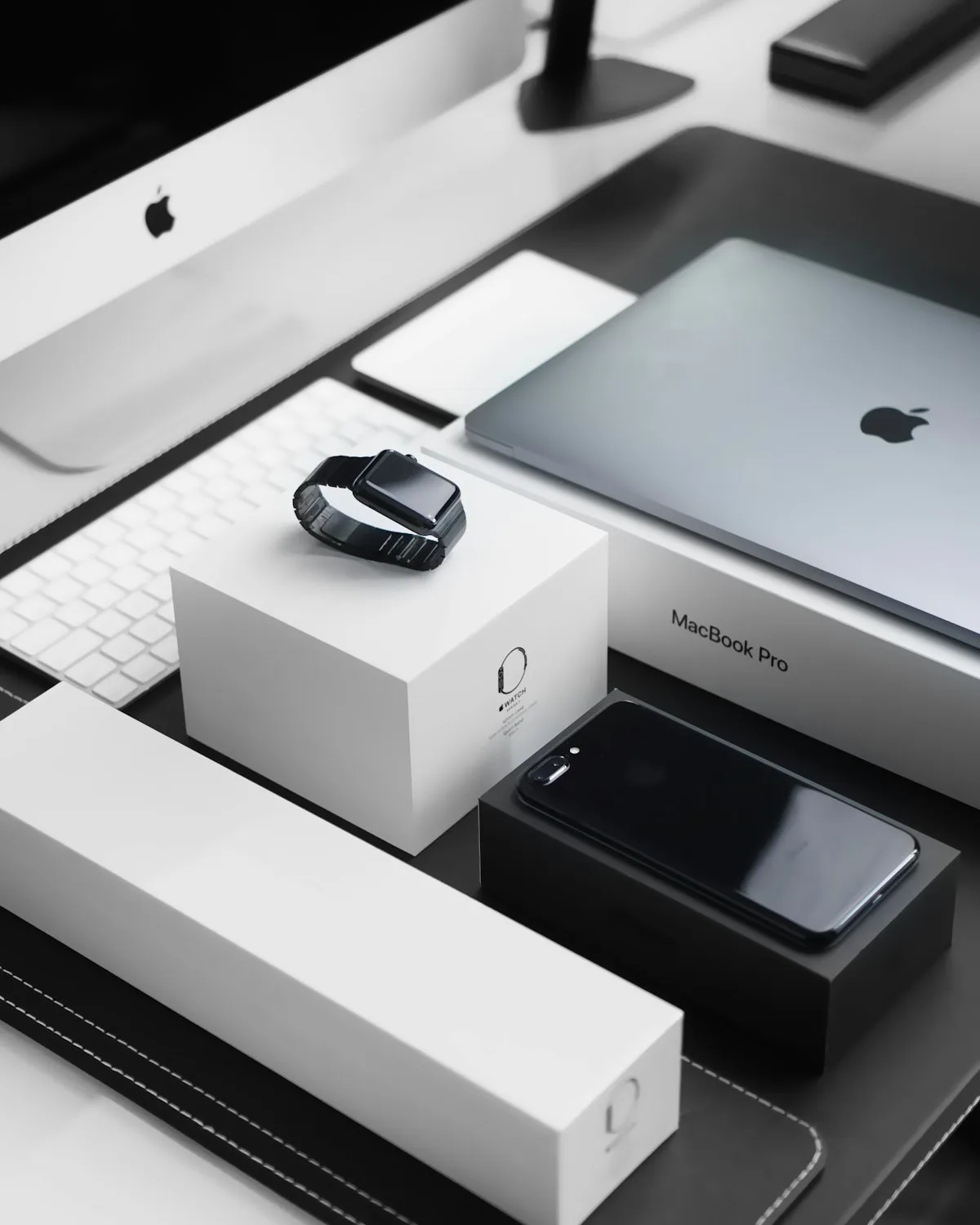
Apple Business tools are now free and global
For years, Apple's business tools were split across three separate services. Apple Business Manager handled app deployment. Apple Business Essentials managed devices for small companies. Apple Business Connect dealt with your business listing on Apple Maps. Three dashboards, three sets of features, partially available depending on your country.
Starting April 14, 2026, Apple is consolidating all of them into a single service called Apple Business. The most significant change: the mobile device management features that let you control company devices, set restrictions, and manage employee access are now free. They used to require a paid subscription and were limited to the US.
The new unified Apple Business tools are available in over 200 countries. For small businesses running 5-20 Apple devices, this eliminates the need for a third-party MDM platform for basic management tasks. Enterprise platforms like Jamf still offer more complex capabilities, but for straightforward device management, Apple's free offering covers the essentials.
This is a meaningful shift for small IT teams and businesses that previously couldn't justify the cost of dedicated device management software. Apple just removed that barrier entirely.
Apple's full access to Google Gemini
The Apple-Google deal to bring Gemini to the iPhone has been reported for months. But new details reveal the scope of what Apple actually got, and it goes well beyond what most people expected.
According to sources familiar with the arrangement, Apple has full access to Google's complete Gemini model. Not a limited API. Not a restricted version. The complete model, which Apple can run in its own data centers under its own privacy framework.
More importantly, Apple can use this access to create smaller, specialized models through a process called distillation. This means taking the full Gemini model, extracting specific capabilities, and producing lightweight versions small enough to run directly on an iPhone. No internet connection required. No cloud processing.
The implications for Apple's AI strategy are significant. Instead of building everything from scratch, Apple can use Gemini as a foundation to accelerate its own on-device AI capabilities. Apple is reportedly still developing its own foundation model independently, but the Gemini access provides a working solution in the meantime.
iOS 27 and the Siri redesign
Apple announced WWDC 2026 this week, and Bloomberg reports that iOS 27 will be centered entirely on AI. The Gemini deal appears to have accelerated Apple's plans considerably.
The biggest change is Siri becoming a standalone app. Similar to ChatGPT in structure, the app will allow conversation-based interactions organized by topic. Users can pin conversations, delete them, and sort them like messages. It's currently being tested across Mac, iPhone, and iPad.
Siri's visual presence is also changing. Instead of the floating button at the bottom of the screen or the glowing border effect, Siri will live inside the Dynamic Island at the top of the display. Users will be able to choose between "search" and "ask" modes directly from there. When processing a request, a pill-shaped indicator appears. Results expand into a translucent panel using Apple's Liquid Glass design language.
Beyond the dedicated app, Siri will be accessible throughout the system. A button above the keyboard allows text-based Siri interactions from any app. Selecting text anywhere triggers an option to get Siri's input. The goal is making Siri available wherever you are in the system, through voice or text.
All of these features reportedly combine Google Gemini's capabilities with Apple's own models. The first developer beta is expected on June 8.
What to watch out for
Major platform shifts always come with rough edges. The first iOS 27 beta will likely have significant bugs, especially with this many AI features shipping simultaneously.
The Gemini dependency raises questions about long-term strategy. Apple is building core user-facing features on top of a Google model. If that partnership changes, the features built on it could be affected. Apple and Google have a complicated history of cooperation and competition, and building deep integrations with a rival's technology is a calculated risk.
There's also Siri's track record. Apple has promised a smarter Siri at virtually every WWDC for the past decade. The results have been incremental at best. The Gemini access suggests this time could be genuinely different, but skepticism is warranted given the history.
What the Apple Business tools mean for creators
If you run a small content business with multiple Apple devices, the free Apple Business tools are worth looking into. Managing which apps are installed, setting up devices for team members, and controlling access becomes simpler without paying for Jamf or a similar platform.
For solo creators, the Siri improvements are more directly relevant. If Siri genuinely becomes useful for research, writing assistance, and quick lookups without leaving your current app, that changes the daily workflow. The system-wide text selection integration alone could save time when working on AI-assisted writing.
The bottom line
Free business tools for small companies. Full Gemini access for on-device AI. A Siri redesign that addresses most of the current pain points. Any of these would be noteworthy individually. Together, they signal that Apple is making its most serious AI push yet.
WWDC 2026 will show whether these reports translate into working features. The first beta on June 8 will be the real test.
A writer is nothing without a reader. If you found this helpful, consider becoming my dear email friend. Nothing would make me happier.
* This article may contain affiliate or SparkLoop partner links. I may earn a small commission at no extra cost to you.